
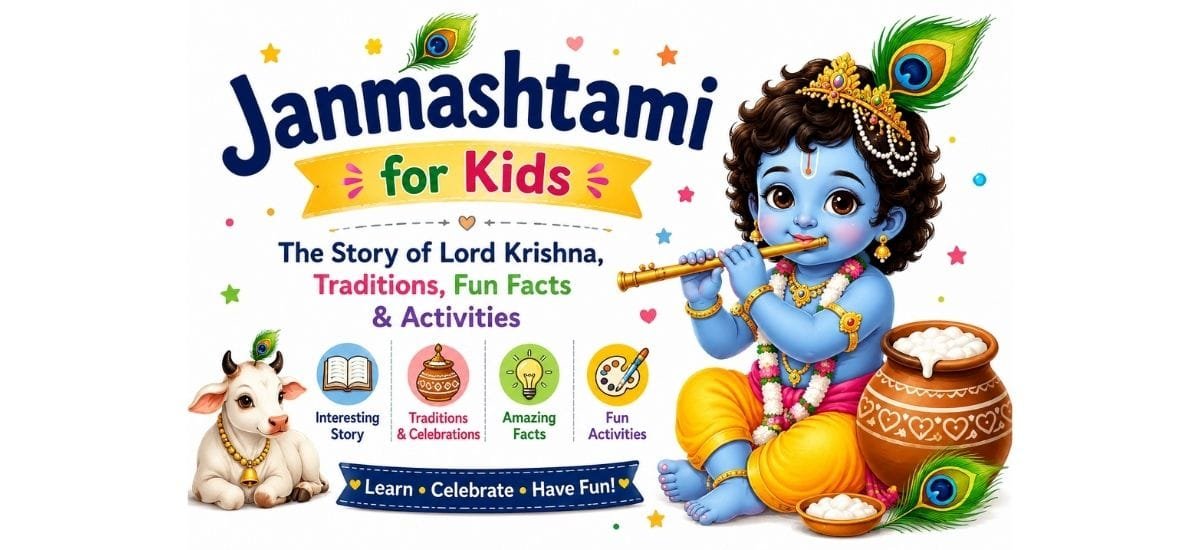
Janmashtami is one of the happiest and most colorful festivals celebrated in India. It marks the birth of Lord Krishna, a beloved deity known for his cheerful smile, playful childhood, kind heart, and wise teachings. Every year, families come together to celebrate this special day with prayers, music, delicious food, beautiful decorations, and joyful traditions.
For children, Janmashtami is much more than a festival. It is a wonderful opportunity to discover inspiring stories, learn about Indian culture, and understand important values like kindness, friendship, honesty, courage, and helping others. Whether it’s dressing up as little Krishna, decorating a tiny jhanki, listening to stories, or taking part in fun family activities, Janmashtami creates memories that children cherish for years.
In this guide, we’ll explore the wonderful story of Lord Krishna, learn why Janmashtami is celebrated, discover exciting traditions like Dahi Handi, read fascinating facts, and find simple activities that make this festival enjoyable for children of all ages.
Janmashtami, also known as Krishna Janmashtami or Gokulashtami, is the festival that celebrates the birth of Lord Krishna. It is one of the most important Hindu festivals and is celebrated by millions of people across India and around the world.
According to Hindu tradition, Lord Krishna was born in Mathura thousands of years ago during a time when people were suffering under the rule of the cruel King Kansa. Krishna’s birth brought hope because it was believed that he would protect goodness, defeat evil, and bring peace to the world.
Today, Janmashtami is celebrated with great joy in homes, temples, schools, and communities. Families decorate their homes with flowers and lights, sing devotional songs, prepare delicious sweets, and gather together to remember the life and teachings of Lord Krishna.
For children, Janmashtami is a festival filled with fun, learning, and creativity. Listening to Krishna’s stories, dressing up in traditional clothes, making festive crafts, and joining family celebrations help children connect with India’s rich traditions in a meaningful and enjoyable way.
Now that we know what Janmashtami is, let’s meet the little boy whose stories have inspired children for generations.
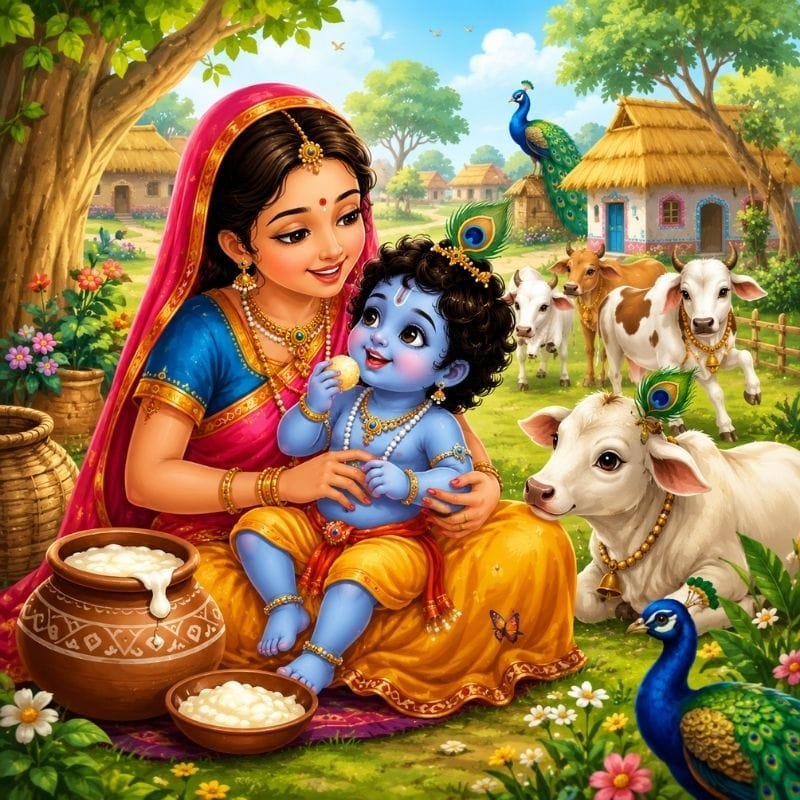
Lord Krishna is one of the most loved and admired figures in Hinduism. He is remembered not only as a wise teacher but also as a cheerful child who filled every day with laughter, music, friendship, and adventure.
Krishna was born to Devaki and Vasudeva in the city of Mathura. Soon after his birth, he was lovingly taken to the village of Gokul, where Yashoda and Nanda raised him with great care and affection. Growing up in Gokul, Krishna spent his days playing with friends, looking after cows, exploring nature, and filling the village with the sweet sound of his flute.
Children especially enjoy Krishna’s stories because they show that even simple moments can become wonderful adventures. Whether he was sharing butter with his friends, helping the people around him, or standing up for what was right, Krishna taught valuable lessons through his actions.
As he grew older, Lord Krishna became a symbol of wisdom, compassion, courage, and truth. His teachings, especially those shared in the Bhagavad Gita, continue to inspire people all over the world to make kind choices, stay brave during difficult times, and always do what is right.
The most amazing part of Krishna’s story begins on the night he was born—a night filled with courage, hope, and miracles.
Long ago, in the beautiful city of Mathura, there lived a kind princess named Devaki and her husband, Vasudeva. Devaki’s brother, King Kansa, ruled the kingdom. Although he was powerful, he was also cruel and wanted everyone to obey him.
One day, a wise voice from the heavens made an important prediction. It said that Devaki’s eighth child would one day defeat King Kansa and end his cruel rule. Hearing this frightened Kansa so much that he locked Devaki and Vasudeva inside a prison.
Years passed, and when their eighth baby was born, something extraordinary happened. It was a dark and rainy night, but the prison was suddenly filled with a bright, peaceful light. The heavy chains around Vasudeva fell away, the prison doors opened on their own, and the guards fell into a deep sleep. It was as if nature itself was helping to protect the newborn baby.
Following a divine message, Vasudeva carefully placed baby Krishna in a small basket and began a brave journey to the nearby village of Gokul. To reach the village, he had to cross the Yamuna River, which was overflowing because of the heavy rain. According to the traditional story, the river became calm enough for Vasudeva to continue, and Sheshnag, the mighty serpent, spread his many hoods above the basket to protect baby Krishna from the rain.
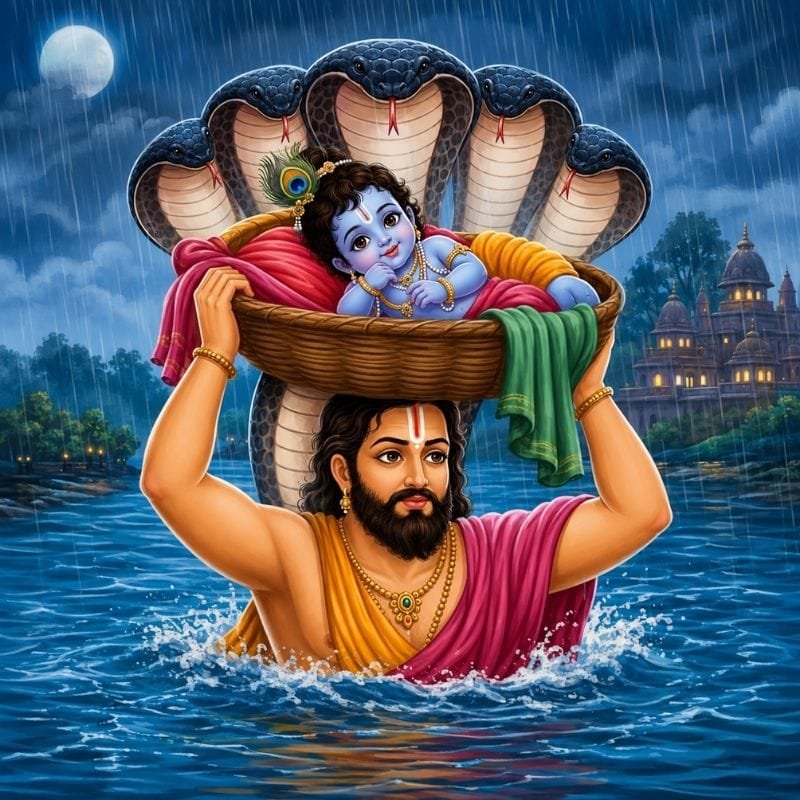
When Vasudeva reached Gokul, he gently placed baby Krishna in the home of Yashoda and Nanda, who lovingly welcomed him as their own son. Vasudeva then returned to the prison, and no one knew that the baby had been safely protected.
As Krishna grew up in Gokul, he became everyone’s favorite. His cheerful smile, playful nature, and kind heart filled the village with happiness. He loved running through the green fields, playing with his friends, caring for cows, and discovering new adventures every day.
Even as a little boy, Krishna showed great courage and kindness. His stories remind us that no matter how small we are, we can make a big difference by helping others, speaking the truth, and doing what is right.
Today, children around the world enjoy listening to the story of baby Krishna because it is filled with hope, bravery, love, and the message that goodness always shines brighter than fear.
Growing up in Gokul, little Krishna was always smiling, playing, and exploring. His childhood was filled with fun adventures that have been shared from one generation to the next. These stories are not only entertaining but also teach children valuable lessons about friendship, kindness, courage, and sharing.
Let’s look at some of Krishna’s most famous childhood adventures.
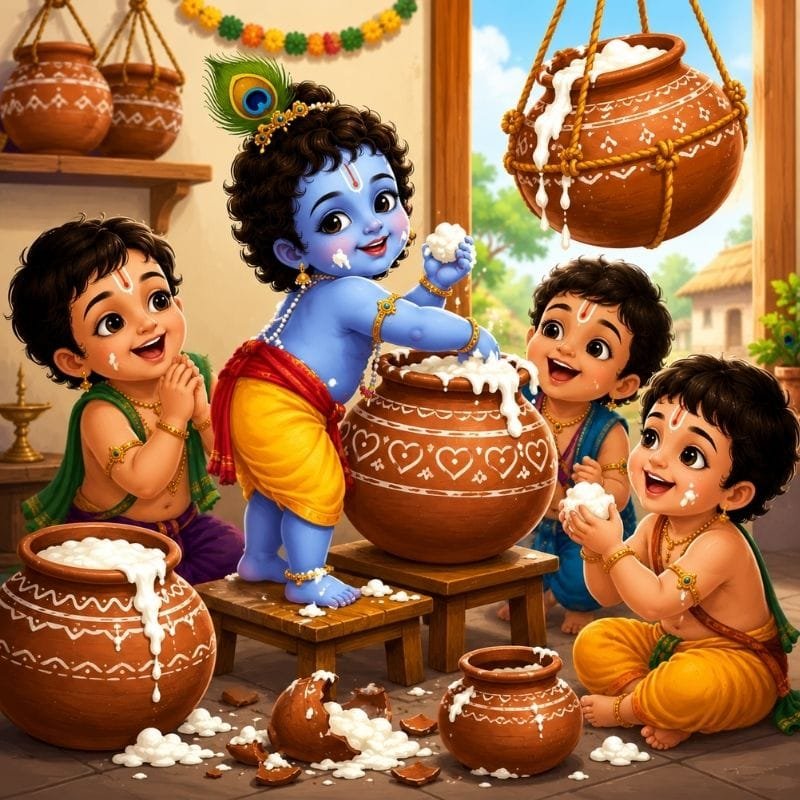
One of the most loved stories about Krishna is how much he enjoyed fresh homemade butter. The women of Gokul stored butter in clay pots hanging from the ceiling to keep it safe. But little Krishna was clever! He would gather his friends, climb onto their shoulders, and together they would reach the pots to taste the delicious butter.
Instead of becoming angry, the villagers smiled at Krishna’s playful tricks because they knew he had a kind and loving heart. From then on, everyone affectionately called him Makhan Chor, which means “the Butter Thief.”
This story reminds children that sharing joyful moments with friends creates happy memories, while also teaching that honesty and respect are important in everyday life.
Krishna loved spending time outdoors with the cows of Gokul. Every morning, he would happily take them to the green fields, care for them, and protect them. Because of his love for cows, Krishna is also known as Govinda and Gopala, names that mean “protector of cows.”
This story teaches children to be gentle with animals, care for nature, and show kindness to every living being.
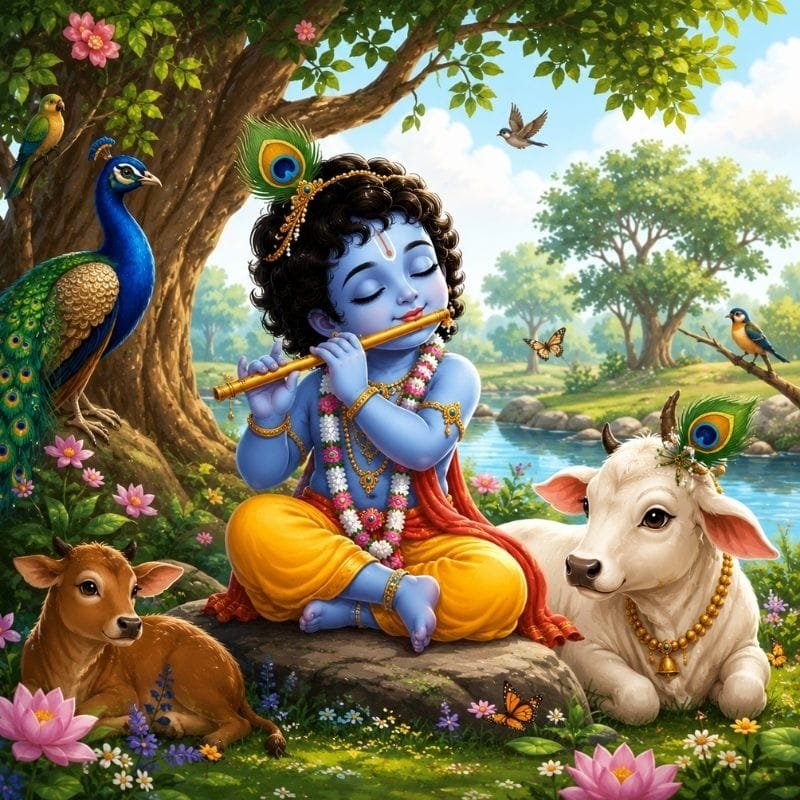
Krishna rarely went anywhere without his beautiful flute, also called the Murli. Whenever he played it, the sweet music filled the air with peace and happiness. According to traditional stories, people, birds, animals, and even the trees seemed to listen quietly to the magical melodies.
For children, Krishna’s flute reminds us that kind words, love, and happiness have the power to bring people together.
One of Krishna’s closest friends was Sudama. Even though they came from different backgrounds later in life, their friendship never changed. When Sudama visited Krishna after many years, Krishna welcomed him with warmth, love, and respect instead of caring about wealth or status.
Their beautiful friendship teaches children that a true friend is someone who cares, shares, and stands by you during both happy and difficult times.
Janmashtami is celebrated to honor the birth of Lord Krishna and to remember the beautiful values he shared through his life. His stories continue to inspire people of all ages with lessons about kindness, courage, honesty, friendship, and standing up for what is right.
According to Hindu tradition, Lord Krishna was born to protect goodness and bring hope during a difficult time. Even as a child, his life was filled with remarkable adventures that showed his bravery, compassion, and love for everyone around him. As he grew older, he became a wise teacher whose guidance continues to inspire millions of people around the world.
For children, Janmashtami is a wonderful opportunity to learn these timeless values in a fun and meaningful way. Through stories, songs, crafts, games, and family celebrations, children discover that even small acts of kindness and honesty can make a big difference.
More than just celebrating Krishna’s birthday, Janmashtami reminds us to fill our lives with love, gratitude, and joy while caring for others and doing what is right.
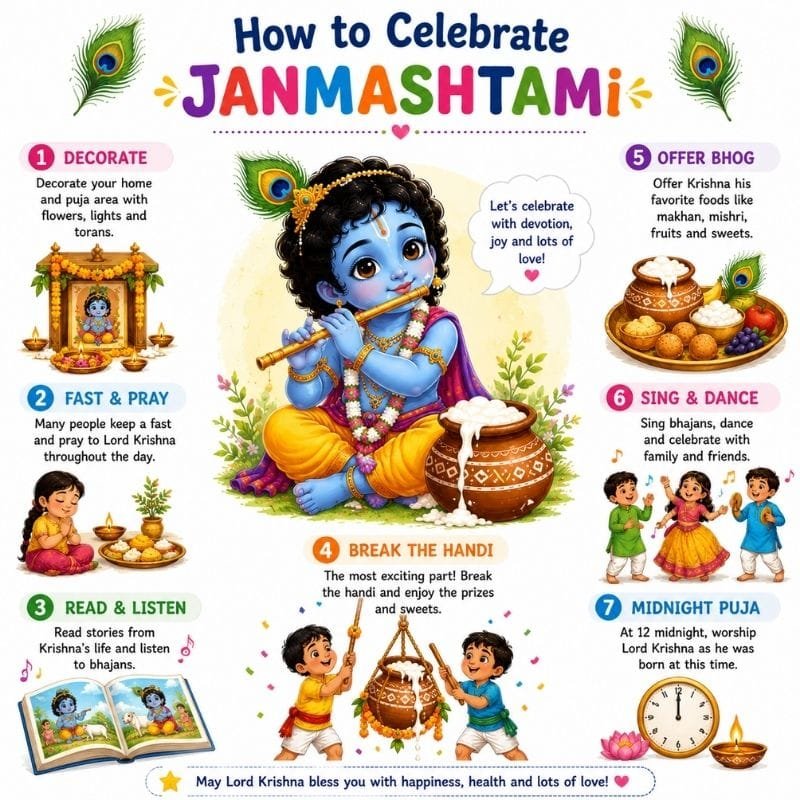
Across India and many other parts of the world, families celebrate Janmashtami with great enthusiasm. Although traditions may differ from one place to another, the spirit of the festival remains the same—welcoming baby Krishna with love and devotion.
Homes and temples are beautifully decorated with flowers, lights, colorful rangoli, and festive decorations. Families gather to sing bhajans (devotional songs), offer prayers, and listen to stories from Krishna’s life. Many people prepare delicious sweets and special dishes to share with family and friends after the celebrations.
Children often become the stars of the celebration! They enjoy dressing up as Lord Krishna or Radha, wearing colorful traditional clothes, crowns, jewelry, and peacock feathers. Schools and communities also organize storytelling sessions, cultural programs, dance performances, and fun activities that help children learn about the festival in an enjoyable way.
One of the most special moments of Janmashtami is the midnight celebration, as it is believed that Lord Krishna was born at midnight. Temples ring bells, devotional songs fill the air, and families gather to welcome baby Krishna with prayers and happiness.
Let’s explore some of the beautiful traditions that make Janmashtami so special.
According to Hindu tradition, Lord Krishna was born at midnight. This is why many families and temples stay awake until 12 o’clock to celebrate his birth.
As midnight approaches, prayers are offered, devotional songs are sung, and the sound of bells fills the temple. A small idol of baby Krishna is lovingly placed in a beautifully decorated cradle or swing, and families gently rock the cradle while singing lullabies and prayers.
For children, this tradition is a joyful reminder of welcoming a newborn baby with love, happiness, and blessings. It also teaches them the importance of family, gratitude, and celebrating special moments together.
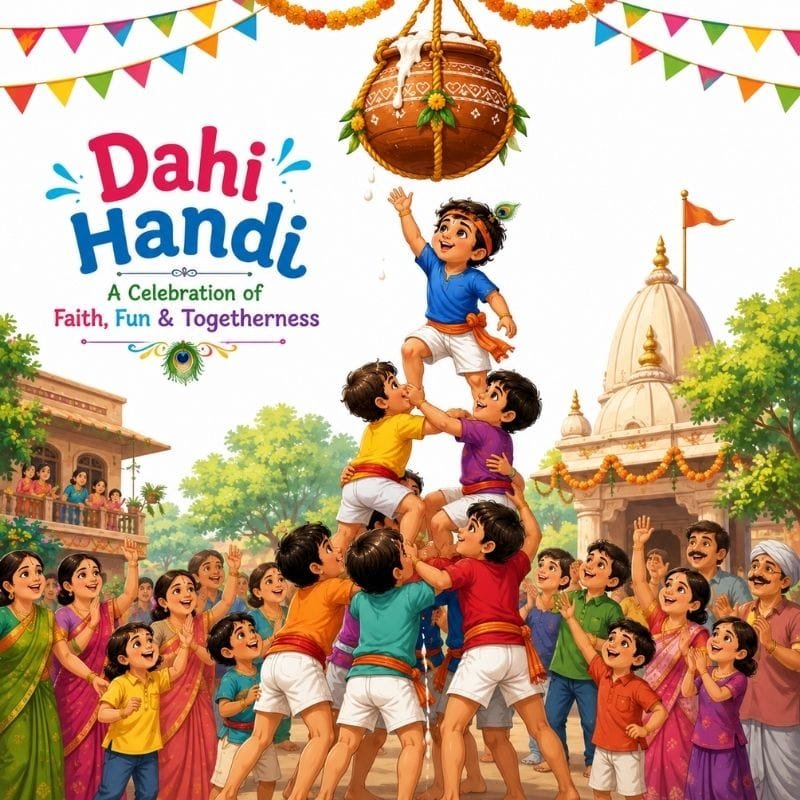
One of the most exciting Janmashtami traditions is Dahi Handi, especially in the state of Maharashtra.
The tradition is inspired by little Krishna’s famous love for butter. As a child, Krishna enjoyed eating fresh butter with his friends. Since the butter pots were often hung high from the ceiling, Krishna and his friends would work together by climbing onto each other’s shoulders to reach them.
Today, this playful childhood story is celebrated through Dahi Handi competitions. A decorated clay pot, called a handi, is hung high above the ground and filled with curd, butter, or sweets. Teams called Govindas work together to form a human pyramid and carefully climb to break the pot.
Watching Dahi Handi is exciting, but it also teaches an important lesson. Just like Krishna and his friends worked together, success often comes through teamwork, trust, communication, and helping one another.
For young children, many schools organize safe and fun versions of Dahi Handi using paper pots, balloons, or classroom games so everyone can enjoy the tradition in an age-appropriate way.
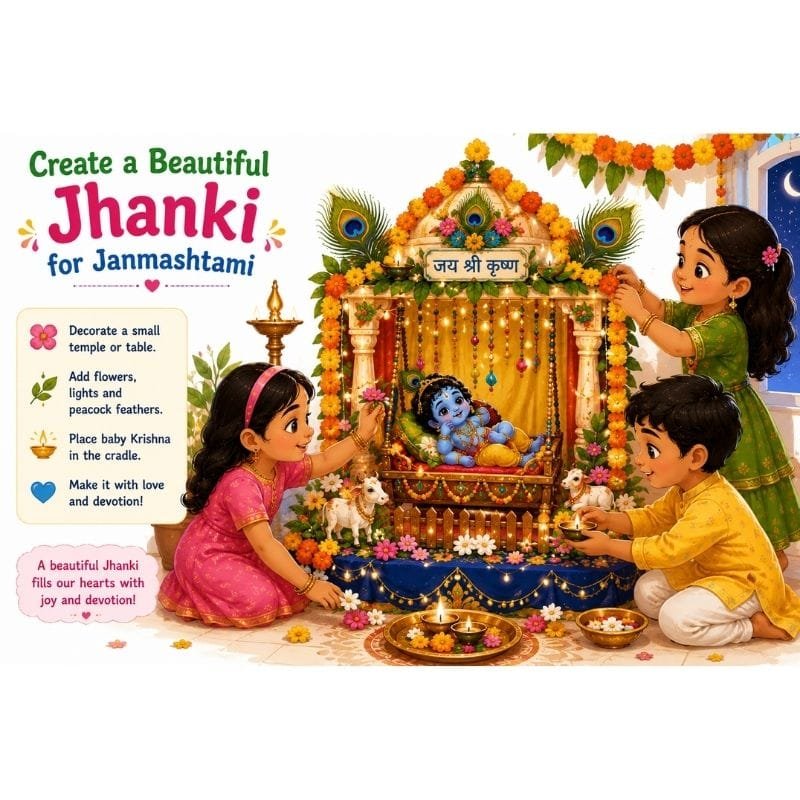
A Jhanki is a beautifully decorated display that tells the story of Lord Krishna’s birth and childhood. Families use small idols, toys, miniature houses, trees, swings, and colorful decorations to recreate scenes from Krishna’s life.
Creating a Jhanki is a favorite activity for many children because it encourages imagination and creativity. They can help arrange tiny decorations, make small craft items, or place baby Krishna in a decorated cradle.
Every Jhanki is unique, but each one celebrates the same message of love, hope, and the joyful arrival of Lord Krishna.
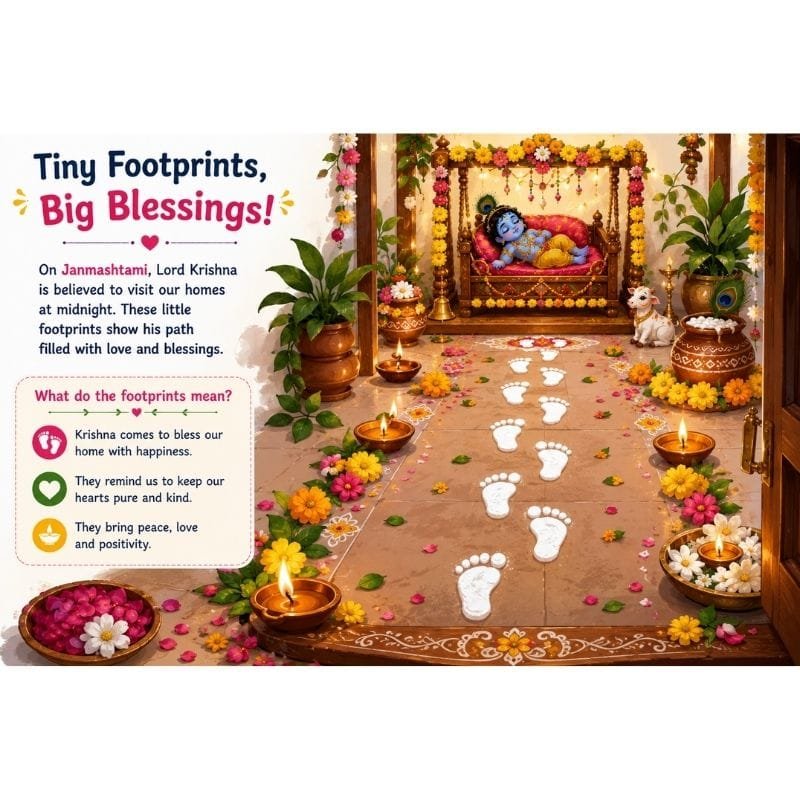
Have you ever seen tiny footprints leading into a home during Janmashtami? This is one of the sweetest traditions of the festival.
Many families make small footprints using rice flour paste, washable paint, or paper cutouts, starting from the entrance of the house and leading to the prayer room. These footprints represent little Krishna walking into the home and bringing happiness, blessings, and prosperity.
Children especially enjoy helping create these tiny footprints, making it a simple family activity that adds excitement to the celebration while introducing them to an important tradition.
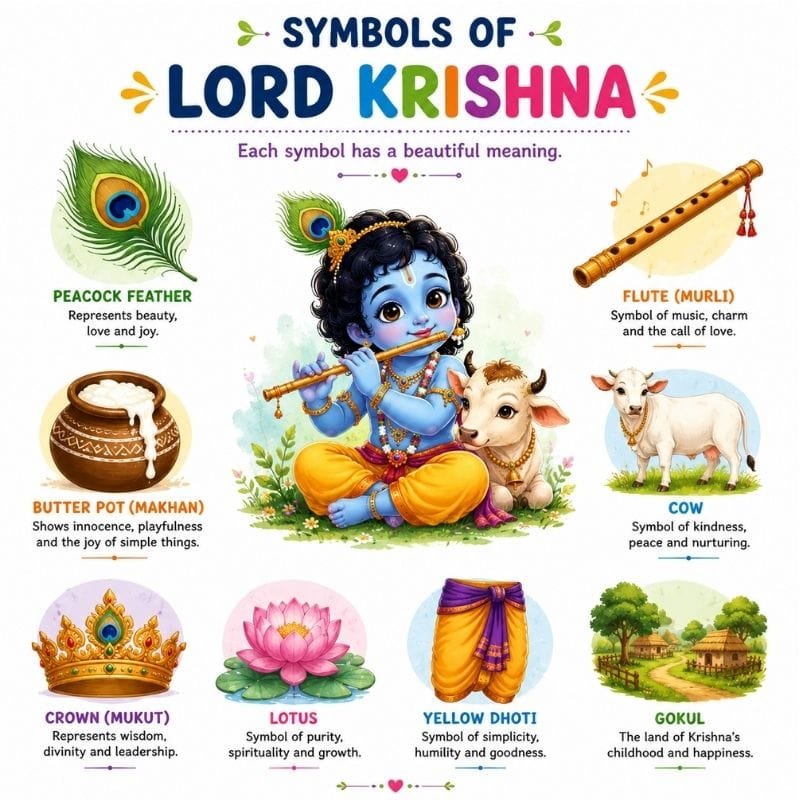
Have you ever noticed that Lord Krishna is often shown with a peacock feather, a flute, a butter pot, or surrounded by cows? These are not just beautiful decorations—they are meaningful symbols that remind us of Krishna’s life, personality, and teachings.
Learning about these symbols helps children understand why they are seen in Janmashtami celebrations, storybooks, temples, and even craft activities.
| Symbol | What It Means |
|---|---|
| 🦚 Peacock Feather | The peacock feather is one of Lord Krishna’s most recognizable symbols. It represents beauty, wisdom, joy, and living in harmony with nature. |
| 🪈 Flute (Murli) | Krishna’s flute reminds us to spread love, kindness, and happiness. Its sweet music brought people, animals, and nature together. |
| 🧈 Butter Pot (Matki) | The butter pot reminds us of Krishna’s playful childhood stories and his famous nickname, Makhan Chor. It also symbolizes the joy and innocence of childhood. |
| 🐄 Cow | Krishna loved caring for cows and was known as Govinda and Gopala. The cow represents kindness, compassion, care, and respect for all living beings. |
| 👑 Crown | Krishna’s crown reminds us that true greatness comes from wisdom, kindness, and humility—not just power. |
| 🌸 Lotus Flower | The lotus grows beautifully even in muddy water, making it a symbol of purity, hope, and inner strength. |
| 💛 Yellow Clothes (Pitambar) | Krishna is often shown wearing bright yellow clothes, which symbolize happiness, positivity, and simplicity. |
As children learn these symbols, they’ll begin to notice them in paintings, festivals, temples, and stories. Understanding what each symbol represents makes Janmashtami even more meaningful and helps children connect with the values Lord Krishna taught.
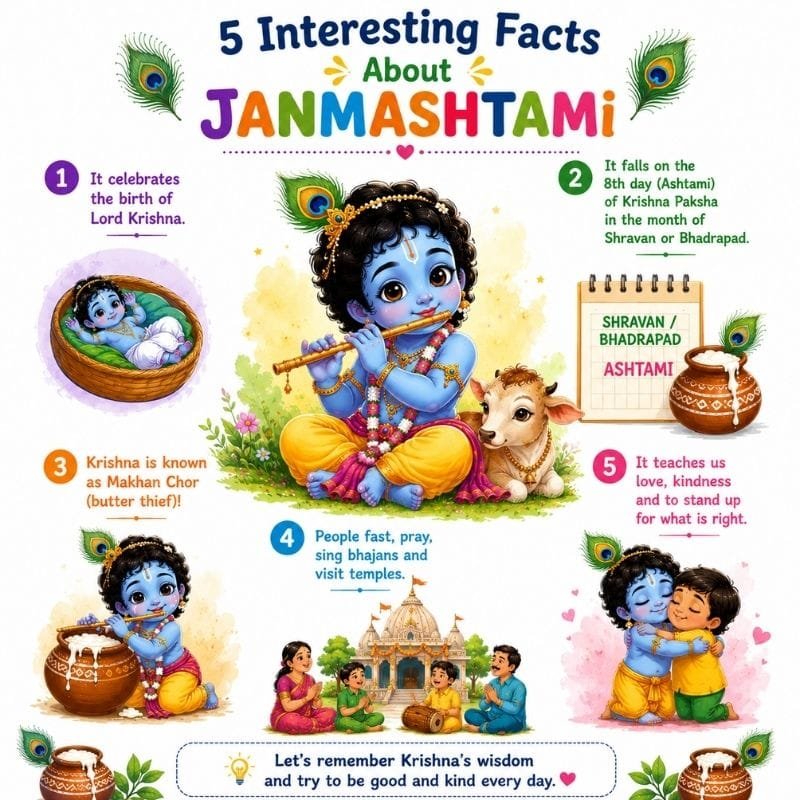
Lord Krishna’s life is filled with fascinating stories that children love to hear. Here are some fun and interesting facts that make learning about him even more exciting.
Mathura, in the state of Uttar Pradesh, is believed to be the birthplace of Lord Krishna and remains an important pilgrimage site today.
Every year, millions of people celebrate Janmashtami with prayers, songs, decorations, and family gatherings.
Although he was born in Mathura, Krishna spent his childhood in the peaceful village of Gokul with Yashoda and Nanda.
Krishna enjoyed eating fresh butter so much that everyone affectionately called him Makhan Chor, meaning “the Butter Thief.”
Stories say that the sweet sound of Krishna’s flute filled everyone with joy and peace.
Krishna spent much of his childhood caring for cows, which is why he is also known as Govinda and Gopala.
The colorful peacock feather became one of his most famous symbols and is still seen in artwork and celebrations today.
Their lifelong friendship teaches us that true friends care about each other no matter what.
Many of his childhood stories take place in forests, gardens, and along the banks of the Yamuna River.
Through his words and actions, Krishna encouraged people to choose honesty, kindness, courage, and compassion.
These teachings continue to inspire millions of people around the world.
During Janmashtami, many children wear a yellow dhoti, peacock feather, and carry a small flute to celebrate the festival.
This exciting tradition celebrates Krishna’s playful adventures with butter pots.
His stories are shared across generations and continue to inspire children and adults alike.
His life reminds us to be kind, truthful, brave, and caring every single day.
Lord Krishna’s stories are not just entertaining—they also teach important life lessons that children can follow every day. His actions show us how small acts of kindness and courage can make the world a better place.
Krishna treated people with love and compassion. Whether he was helping his family, caring for animals, or supporting his friends, he always showed kindness. Children can follow this example by being helpful, polite, and caring toward others.
Krishna’s friendship with Sudama reminds us that true friendship is based on love, trust, and support—not on money or possessions. A good friend shares, listens, and stands by others during both happy and difficult times.
Even as a young boy, Krishna faced challenges with courage. His stories inspire children to stay confident, try their best, and never give up when things become difficult.
Krishna loved spending time with his friends and sharing joyful moments with them. Sharing toys, food, ideas, and kindness helps everyone feel included and happy.
Krishna cared deeply for cows and loved spending time in nature. His stories remind us to protect animals, care for plants, and keep our surroundings clean.
One of the reasons children love Krishna is because he brought smiles wherever he went. His cheerful nature reminds us that a smile, kind words, and a helpful attitude can brighten someone’s day.
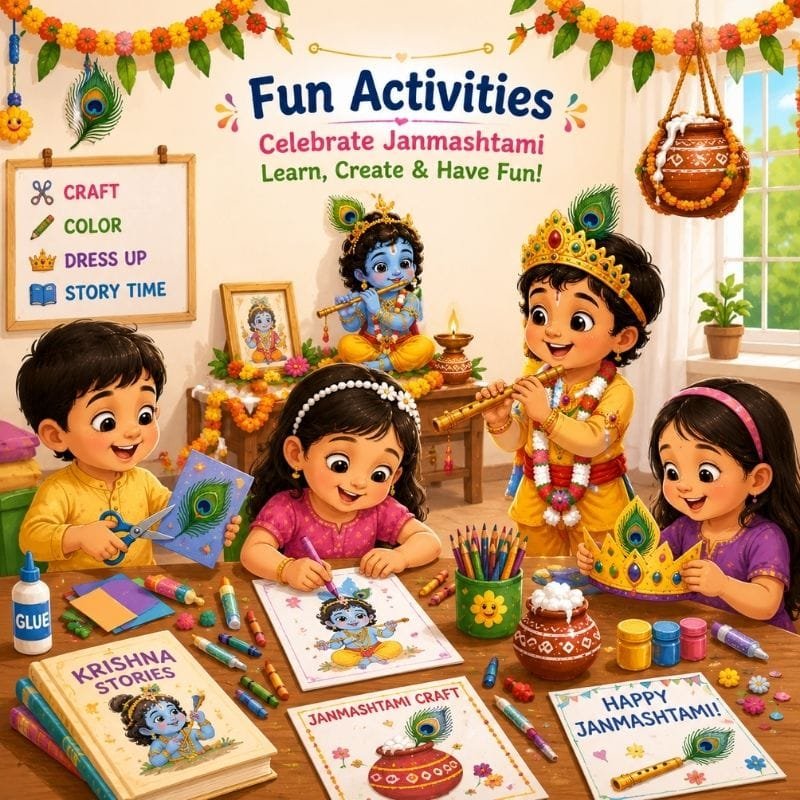
One of the best ways to help children understand a festival is by letting them experience it through fun, hands-on activities. You don’t need expensive decorations or elaborate plans to celebrate Janmashtami. A few simple traditions, stories, songs, and creative activities can make the day memorable while helping children learn about Lord Krishna in an enjoyable way.
Here are some easy Janmashtami activities that are perfect for families, preschools, classrooms, and homeschool celebrations.
Children love listening to stories, and Janmashtami is the perfect time to introduce them to the adventures of little Krishna. Choose short, age-appropriate stories about baby Krishna, Makhan Chor, Krishna and Sudama, or Krishna’s playful childhood. Reading together not only builds language skills but also helps children understand the values of kindness, courage, and friendship.
One of the most popular Janmashtami traditions is dressing children as Lord Krishna or Radha. A simple yellow outfit, a peacock feather, a toy flute, and a bright smile are all you need to create a memorable celebration. Many schools also organize fancy dress competitions, making this activity even more exciting for little ones.
Invite children to help create a small Jhanki using toys, cardboard, artificial grass, flowers, and a small Krishna idol or picture. They can arrange tiny houses, trees, cows, and a cradle to recreate scenes from Krishna’s childhood. This activity encourages creativity while helping children understand the festival’s traditions.
Using washable paint, rice flour paste, or paper cut-outs, make tiny footprints leading from the entrance of your home to your prayer area. Tell children that these footprints represent baby Krishna arriving to bless the home. It’s a simple tradition that children look forward to every year.
Music is an important part of Janmashtami celebrations. Play simple Krishna bhajans and encourage children to sing along or clap to the rhythm. Even if they don’t know all the words, they’ll enjoy the cheerful atmosphere and become familiar with devotional songs.
Create a safe version of Dahi Handi for young children by hanging a small paper pot filled with chocolates, stickers, or paper stars at a low height. Instead of climbing, children can work together to gently tap the pot with a stick or complete a fun challenge before opening it. This activity introduces the tradition while keeping it age-appropriate and safe.
Janmashtami is the perfect occasion for children to get creative. They can make peacock feathers, Krishna crowns, butter pots, paper flutes, handprint art, and many other festive crafts. Craft activities not only develop fine motor skills but also help children remember the stories and symbols of Lord Krishna in a fun way.
🖍️ Solve Janmashtami Worksheets and Coloring Pages
Coloring pages, mazes, matching games, tracing sheets, patterns, and simple puzzles make learning about Janmashtami exciting for preschoolers and kindergarteners.
We’ve also created a FREE 10-sheet Janmashtami Activity Bundle featuring Krishna colouring pages, mazes, number matching, footprint tracing, pattern activities, matki decorating, and a cut-and-paste puzzle.
👉 [Download the FREE Janmashtami Worksheets for Kids]
Link:
Free Janmashtami Worksheets for Kids
Cooking with children is another wonderful way to celebrate. Invite them to help prepare a simple festive sweet such as makhan mishri, panjiri, or ladoo with adult supervision. As you cook, talk about Krishna’s love for butter and why these traditional foods are offered during Janmashtami.
At the end of the day, ask children a few simple questions:
These small conversations help children connect the festival with real-life values that they can practice every day.
Learning a few new words is a fun way for children to understand the festival even better. Here are some important Janmashtami words explained in a simple way.
| Word | Meaning |
|---|---|
| Janmashtami | The festival that celebrates the birth of Lord Krishna. |
| Krishna | A beloved Hindu deity known for his kindness, wisdom, and playful childhood. |
| Mathura | The city where Lord Krishna was born. |
| Gokul | The village where Krishna spent his childhood. |
| Devaki | Krishna’s birth mother. |
| Vasudeva | Krishna’s birth father. |
| Yashoda | The loving mother who raised Krishna in Gokul. |
| Nanda | Krishna’s foster father. |
| Radha | Krishna’s beloved companion in many devotional stories. |
| Sudama | Krishna’s childhood friend who teaches us the value of true friendship. |
| Murli | Another name for Krishna’s flute. |
| Makhan | Fresh butter, one of Krishna’s favorite foods. |
| Makhan Chor | “The Butter Thief,” Krishna’s playful childhood nickname. |
| Jhanki | A decorative display showing scenes from Krishna’s life. |
| Dahi Handi | A traditional Janmashtami celebration inspired by Krishna’s love for butter. |
| Govinda | One of Krishna’s names, meaning “protector of cows.” |
| Bhajan | A devotional song sung in praise of God. |
These words help children become familiar with the stories, traditions, and symbols they see during Janmashtami celebrations. Learning them also makes story time, classroom discussions, and family celebrations more meaningful and enjoyable.
Janmashtami is a Hindu festival that celebrates the birth of Lord Krishna. It is one of the most important festivals in India and is celebrated with prayers, devotional songs, decorations, storytelling, and family gatherings.
Janmashtami is celebrated every year in August or September, depending on the Hindu lunar calendar. The festival falls on the eighth day (Ashtami) of the Krishna Paksha during the month of Bhadrapada.
According to Hindu tradition, Lord Krishna was born at midnight in a prison in Mathura. Families and temples celebrate this special moment with prayers, devotional songs, and by gently rocking baby Krishna’s cradle at 12 o’clock.
Lord Krishna was born to Devaki and Vasudeva. To protect him from the cruel King Kansa, he was taken to the village of Gokul, where he was lovingly raised by Yashoda and Nanda.
As a playful child, Krishna loved fresh butter. Stories tell us that he would cleverly reach butter pots hanging from the ceiling and enjoy butter with his friends. This earned him the affectionate nickname Makhan Chor, which means “the Butter Thief.”
Dahi Handi is a popular Janmashtami tradition inspired by Krishna’s childhood adventures. A decorated clay pot filled with curd, butter, or sweets is hung high above the ground, and teams work together to reach and break it. The tradition celebrates teamwork, courage, and Krishna’s playful spirit.
A Jhanki is a decorative display that recreates scenes from Lord Krishna’s birth and childhood. Families decorate it with small idols, swings, flowers, miniature houses, cows, and other festive decorations.
The peacock feather is one of Lord Krishna’s most recognizable symbols. It represents beauty, joy, wisdom, and harmony with nature, which is why it is often included in artwork and Janmashtami celebrations.
Children can celebrate Janmashtami by listening to Krishna stories, dressing up as Krishna or Radha, decorating a Jhanki, making festive crafts, solving worksheets, coloring Krishna pictures, singing bhajans, and taking part in family traditions like creating tiny Krishna footprints.
Lord Krishna teaches children many important values, including kindness, honesty, courage, friendship, sharing, compassion, and always choosing to do the right thing. His stories continue to inspire children to become caring and responsible individuals.
Janmashtami is a festival filled with joy, faith, and beautiful traditions that bring families together. Through the inspiring story of Lord Krishna, children learn valuable lessons about kindness, courage, friendship, and helping others. Whether it’s listening to Krishna’s childhood adventures, decorating a Jhanki, enjoying a safe Dahi Handi celebration, or singing devotional songs, every tradition helps children connect with India’s rich cultural heritage in a fun and meaningful way.
The best part about Janmashtami is that it combines learning with celebration. Parents and teachers can use stories, games, crafts, music, and simple family activities to help children understand the festival while creating memories they’ll treasure for years to come.
If you’re planning a Janmashtami celebration with little ones, don’t stop here! Explore our collection of easy Janmashtami crafts for preschoolers, free Krishna coloring pages, and fun printable worksheets to make the festival even more exciting and educational.
We wish you and your family a joyful, peaceful, and blessed Janmashtami! 🌸🦚🪈
If your little one enjoyed learning about Lord Krishna and Janmashtami, here are some more fun activities and printables to continue the learning journey: