
Raksha Bandhan is one of India’s most loved festivals, celebrated with joy, love, and family togetherness. Every year, brothers and sisters eagerly wait for this special day to strengthen their bond by tying a sacred thread called a Rakhi.
But have you ever wondered why we celebrate Raksha Bandhan, where this tradition began, or what the beautiful thread truly represents?
In this guide, we’ll explore the meaning of Raksha Bandhan in a way that’s easy for children to understand. We’ll also look at its history, famous stories, traditions, and ways families celebrate this beautiful festival.
Raksha Bandhan is a traditional Hindu festival that celebrates the special relationship between brothers and sisters.
The name itself has a beautiful meaning:
Together, Raksha Bandhan means “the bond of protection.”
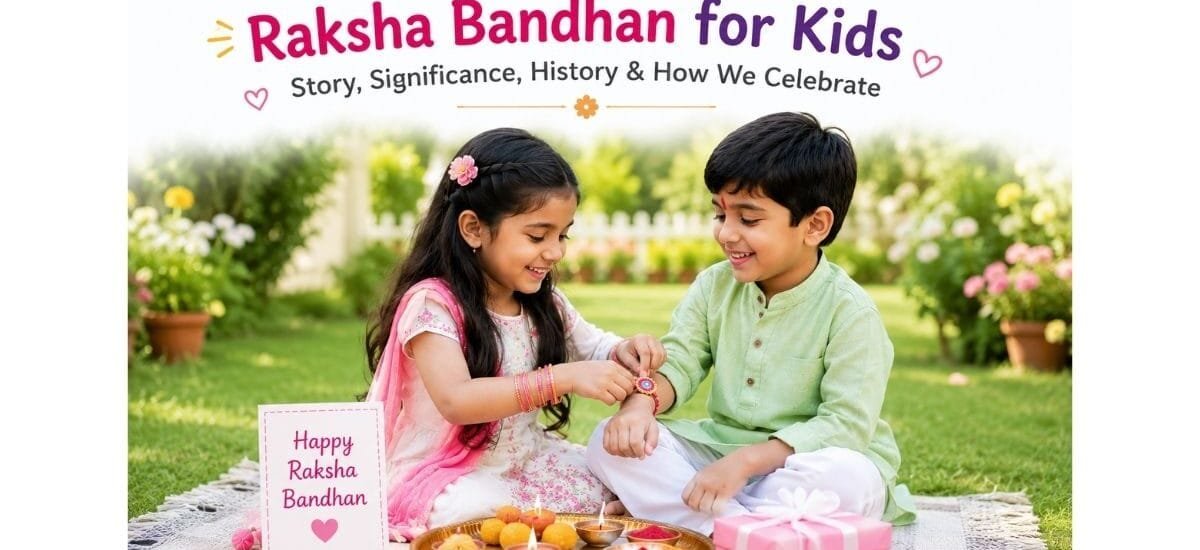
On this day, sisters tie a colorful decorative thread called a Rakhi around their brother’s wrist. The brother promises to love, protect, and support his sister throughout life. In return, sisters pray for their brothers’ happiness, good health, and success.
Today, the festival has grown beyond biological siblings. Many people tie Rakhi to cousins, close friends, sisters-in-law, brothers-in-law, and even those they consider family, celebrating love, trust, and lifelong support.
Raksha Bandhan celebrates much more than the relationship between a brother and sister.
It reminds us of values such as:
While the traditional promise is that a brother protects his sister, modern families understand protection as mutual care. Brothers and sisters encourage one another, stand by each other during difficult times, celebrate successes together, and build memories that last a lifetime.
The festival teaches children that family relationships grow stronger through kindness, respect, and being there for one another—not only through gifts.
There are several stories associated with Raksha Bandhan. One of the most popular and child-friendly stories is about Lord Krishna and Draupadi.
Long ago, Lord Krishna accidentally injured his finger while handling the Sudarshan Chakra. Seeing him hurt, Draupadi immediately tore a small piece from the edge of her saree and gently tied it around his bleeding finger.
Krishna was deeply touched by her kindness. He promised that whenever Draupadi needed help, he would always protect her.
Years later, during the incident in the royal court when Draupadi was humiliated, Lord Krishna came to her aid and protected her honor by miraculously providing endless cloth for her saree.
This story beautifully shows that Raksha Bandhan is not only about receiving protection—it is also about selfless love, compassion, gratitude, and standing by those we care about.
Another well-known story comes from medieval Indian history.
Queen Karnavati of Mewar feared that her kingdom would be attacked. She sent a Rakhi to Emperor Humayun as a symbol of trust and brotherhood, asking for his help.
Although they were not related by blood, Humayun respected the bond represented by the Rakhi and came forward to support her.
Whether every historical detail is exact or not, this story has become a powerful symbol of trust, honor, and protection.
Raksha Bandhan is celebrated on the full moon day (Purnima) in the Hindu month of Shravana (Sawan).
Since the Hindu calendar follows the lunar cycle, the festival falls on different dates each year, usually during August.
Families celebrate Raksha Bandhan with warmth and joy. While customs may vary across regions, a typical celebration includes these traditions.
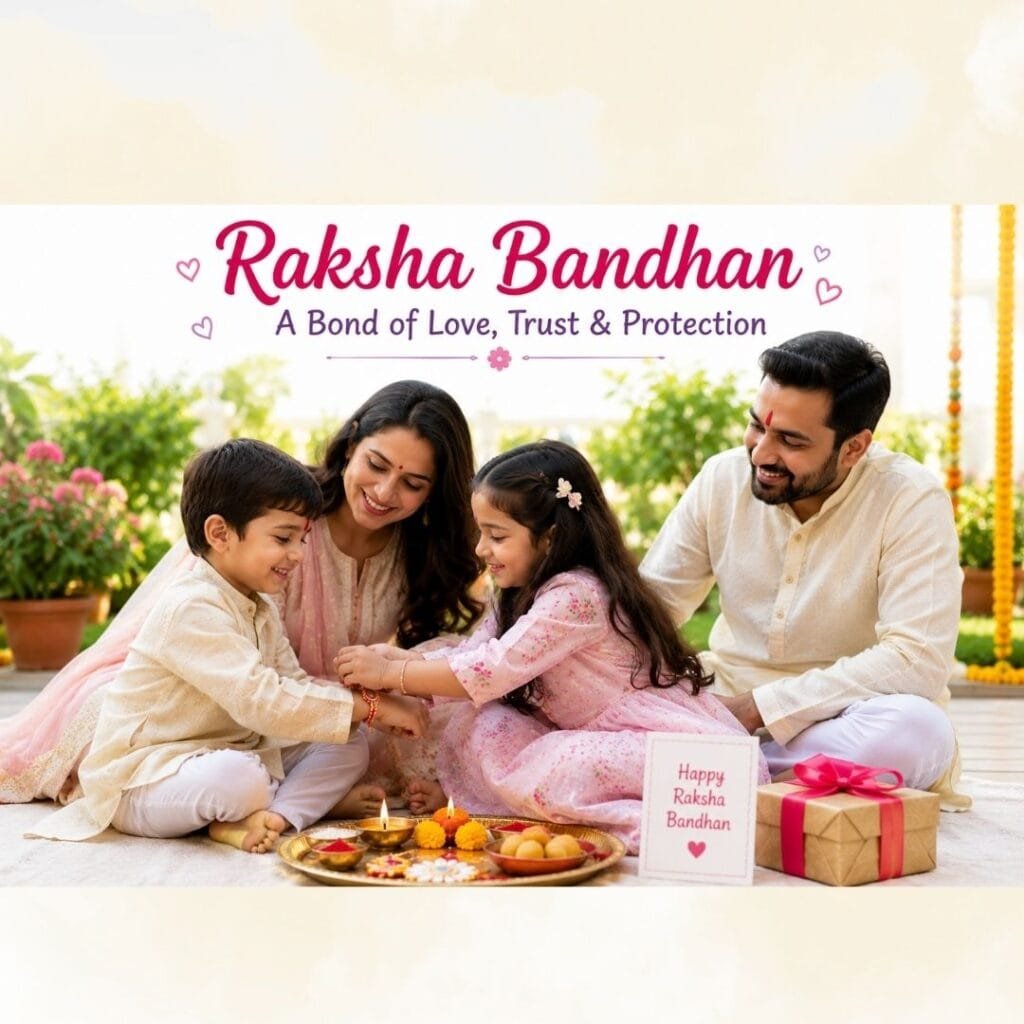
A decorated thali is prepared with:
Children often enjoy decorating the thali with colorful designs and flowers.
The sister ties the Rakhi around her brother’s wrist while praying for his health, happiness, and success.
The brother promises to support, respect, and care for his sister.
A tilak made of kumkum and rice is applied to the brother’s forehead as a symbol of blessings and good wishes.
Family members feed each other sweets such as laddoos, barfi, or peda to celebrate the occasion.
Sharing sweets symbolizes joy and togetherness.
Brothers often give thoughtful gifts to their sisters as a token of love and appreciation.
Many families now exchange gifts both ways, emphasizing gratitude rather than tradition alone.
Perhaps the most important tradition is simply spending quality time together—sharing meals, laughing, taking photographs, playing games, and creating lasting memories.
Raksha Bandhan helps children understand important life values from an early age.
The festival encourages children to:
These lessons stay with children long after the festival is over.
Make the festival even more meaningful by involving children in these fun activities:
These activities help children understand the true spirit of the festival while making beautiful memories.
Raksha means protection, and Bandhan means bond. Together, it means the bond of protection and love.
Sisters tie Rakhi as a symbol of love, prayers, and good wishes for their brothers’ happiness and well-being.
Yes. Many modern families exchange gifts both ways to celebrate mutual love and appreciation.
No. Today, Raksha Bandhan celebrates any meaningful relationship built on trust, love, care, and lifelong support. People may tie Rakhi to cousins, friends, or others they consider family.
Young children can learn about kindness, sharing, gratitude, empathy, family values, and the importance of caring for one another.
If you enjoyed learning about Raksha Bandhan, you might also like these family-friendly articles from MomKidHub:
Explore more kids’ activities, educational printables, parenting tips, DIY crafts, and STEM learning ideas to make every day a fun learning adventure with your child.