
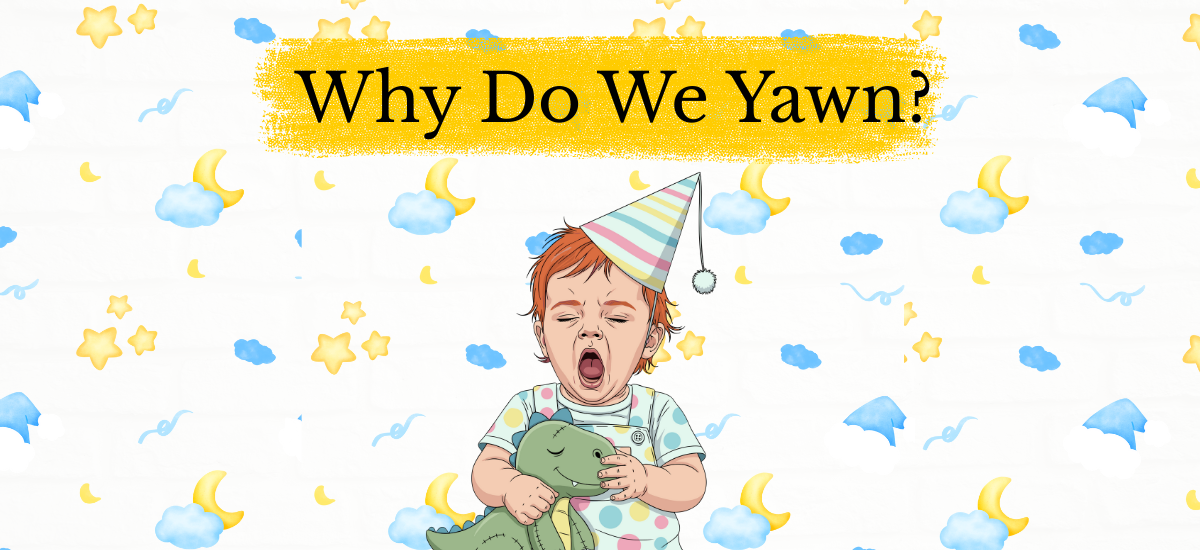
Have you ever noticed that when someone yawns, you suddenly feel like yawning too? This happens because our bodies sometimes copy what others do. Kids often find this funny and mysterious, so naturally they ask:
“Mumma, why do we yawn?”
Let’s explore the science behind yawning in a fun and simple way that children can easily understand.
A yawn is a deep breath in through the mouth that stretches your jaw, face, and lungs. It usually happens when:
Yawning is something every human does — babies, kids, and adults!
Scientists are still studying yawning, but research suggests a few important reasons why our body does it.
Our brain works all day thinking, learning, and remembering. Because of this, it can warm up slightly — just like a computer. So, when we yawn, a rush of cool air enters our mouth and may help regulate brain temperature. In simple words, yawning acts like a tiny cooling system for our brain.
When we’re tired, our body slows down. That’s why yawning stretches our face, neck, and lungs. As a result, this stretching sends signals to the brain to wake up and become alert. For example, you might yawn more in the morning or during a long class.
Another theory suggests that yawning happens when our breathing is slow. In that case, a deep yawn helps us take in more oxygen and release extra carbon dioxide. Although scientists are still studying this idea, it shows how smart our body systems really are.
Have you ever yawned just because someone else did? This happens because of special brain cells called mirror neurons. These neurons help us copy actions we see others doing. So, when we see someone yawn, our brain automatically signals us to yawn too.
You can tell your child:
We yawn to cool our brain and help our body wake up.
Simple explanations help kids remember science concepts easily.
Try this mini experiment:
Yawning Observation Game
Kids love discovering that science happens in real life!
Small body actions like yawning help children understand:
Yawning may seem small, but actually it tells us a lot about how our body works. So, whenever your child asks “why,” encourage their curiosity. After all, every question is the beginning of learning how the world works.


✨ Shruti Jain Mom. Maker. Memory Creator. Hi! I’m Shruti — the heart and hands behind MomKidHub, a space where learning feels like play and creativity flows from the kitchen table to curious little minds. I’m a proud mom of a joyful 5-year-old and a firm believer that the early years are magical. Through simple activities, DIY crafts, and hands-on