
Before making colours, you can also read the story of Holi for kids to help children understand why we celebrate this beautiful festival.
Three years ago, just before Holi, I stood in a store aisle reading the ingredient list on a packet of colours — and I froze. Words I couldn’t pronounce. Chemicals I wouldn’t put on my own skin… let alone my child’s.
That day I came home and decided:
If colours touch my child’s skin, they should be safe enough to come from my kitchen.
So we experimented. Failed. Tried again. Laughed at purple hands and yellow countertops. And finally — we created the softest, safest, most beautiful homemade gulal.
Since then, making natural colours has become our Holi ritual, not just a DIY.
Today I’m sharing that exact method with you so your little ones can enjoy Holi freely — without you worrying about their skin.
Most commercial colours may contain synthetic dyes, microplastics, and artificial fragrances. These can sometimes cause:
Natural colours, on the other hand, are:
✔ gentle on delicate skin
✔ biodegradable
✔ non-toxic
✔ safe if accidentally touched near mouth
✔ budget friendly
Honestly? Once you try homemade gulal, it’s hard to go back.
One of my favourite parts of this activity is telling kids:
“We’re not buying colours… we’re cooking them!”
All you need:
That’s it. No fancy supplies. No chemicals.
Affiliate Disclosure

Some of the links on this website are affiliate links. This means that if you click on the link and purchase an item, I may receive a small commission at no extra cost to you.
I only recommend products, tools, and resources that I personally use, trust, or genuinely believe will be helpful for parents and children. The small commissions earned help support this website and allow me to continue sharing free activities, printables, and parenting resources.
Thank you for supporting this blog.
This is the exact process we follow every year:
Step 1 — Prep
Wash and chop vegetables.
Step 2 — Extract Colour
Grind or boil with a little water until colour releases.
Step 3 — Strain
Separate coloured liquid from pulp.
Step 4 — Powder Base
Mix liquid into cornflour slowly until crumbly texture forms.
Step 5 — Dry
Spread and dry completely (sun or fan).
Step 6 — Finish
Crush gently into soft powder.
✔ Texture should feel like store gulal — light and fluffy.
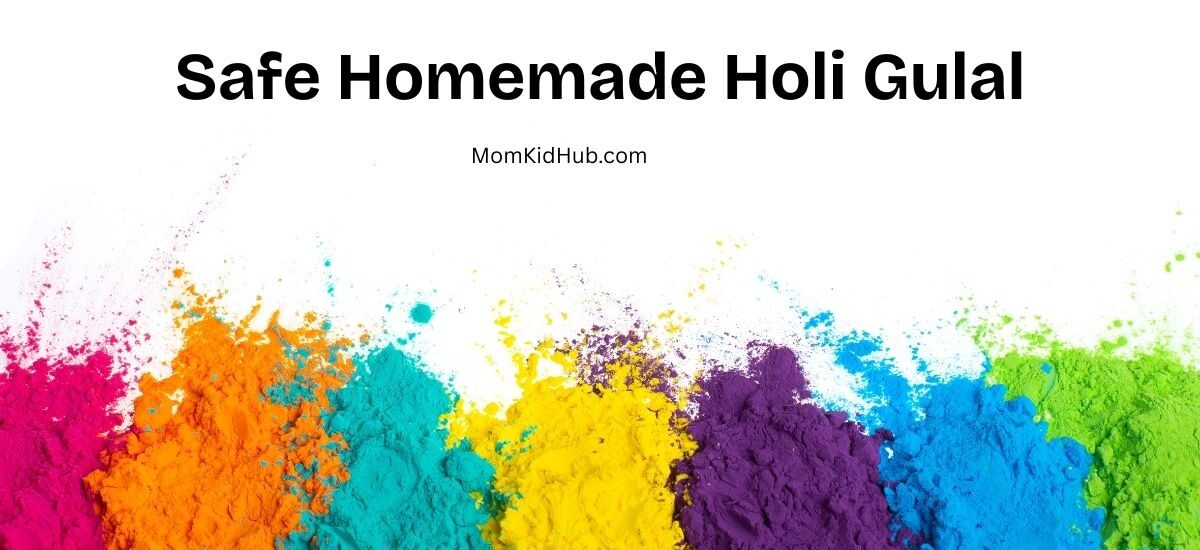
Children enjoy choosing colours like paint shades. Here’s our favourite chart:
| Shade | Ingredient |
|---|---|
| ❤️ Red | Beetroot |
| 💚 Green | Spinach/Coriander |
| 💛 Yellow | Turmeric |
| 💜 Purple | Red cabbage |
| 💙 Blue | Red cabbage + baking soda |
| 🌸 Pink | Red cabbage + lemon |
| 🧡 Orange | Beetroot + turmeric |
Fun fact for kids:
Red cabbage is like a science experiment — it changes colour depending on what you mix with it!
You’ll love our GEMS Candy Color Experiment too — another simple colour-changing science activity kids adore.
This activity is not just about colours. It’s about:
Kids feel proud saying:
“We made our own Holi colours!”
And that confidence? Priceless.
If your child enjoys hands-on learning like this, explore our 50 Indoor Activities for Kids for more low-prep ideas.
You may also enjoy these printable activity packs designed to build creativity and brain skills:
• Bilateral Brain Gym Worksheets (10 Activities) – fun coordination and focus-building exercises for kids.
• St. Patrick’s Day Activity Bundle (30+ Worksheets) – themed puzzles, colouring, and learning worksheets perfect for preschool and early learners.
👉 Explore our kids activity printables here.
Even natural colours should be used safely.
If stored properly, your DIY colours stay fresh.
Store colours: ₹300–₹800/kg
Homemade colours: ≈ ₹150/kg
You save money and protect your child’s skin.
Win-win.
These powders are so safe that we use them even after Holi:
So nothing goes to waste.
Holi is not about how bright the colour is.
It’s about how happy the child wearing it is.
Making colours at home slowed us down. It made the festival more meaningful. More intentional. More joyful.
And now, every year when we take out our jars of homemade gulal, I don’t just see colours, I see memories in every shade.
Yes, if made from edible ingredients like vegetables and turmeric and used as dry powders.
Up to 2–3 weeks when stored airtight and dry.
No. They wash off easily with water and mild soap.
Yes, arrowroot powder works equally well.
Homemade colours are free from synthetic dyes and harsh chemicals, making them gentler on children’s sensitive skin.
Turmeric gives the most vibrant yellow, while beetroot creates a rich pink-red shade.
👉 50 Indoor Activities for Kids
👉 Easy STEM Activities at Home
👉 GEMS Candy Color Experiment
👉 Bilateral Brain Activity for Kids